Learning, the act of gaining knowledge, is a craft unto itself. It starts with questions - the what ifs, how abouts, whys, . . . leading from the unknown to the known, through inquiry, experimentation, travel, and of course pure accident.

This is about how it happens in my life.

This is what Partnering looks like

A little piece of paradise.
That's how I have referred to the "bright and cheerful" East York bungalow that Dear Hubby and I have called Home since 2003. 


Home.

It's a powerful word, one that evokes a deep instinctual sense that merges person with place.

When it came time for us to sell our Home the question was not "do we get a realtor" but "who do we use".   As a long time Airmiles collector Century21 was always an option, until Dear Hubby came Home one day and said a friend from the old days was a realtor, and we should contact her.

That's how I met Helga Teitsson of Helga's Homes.

Real estate is a competitive business, and like many industries that have historically relied on information asymmetries, the Internet has changed the landscape for ever.
In some cases this means huge billboards and other forms of large scale advertising, followed by flyers in the mail box. 
But ask yourself: how does that help you, the client, sell or buy your home?

Helga Teitsson takes a different approach.  Strange to say, but she knows it's not about her. She knows it's about the Home, whether buying or selling.  Helga brings her years of expertise and market knowledge into every relationship. And when it comes to selling, she literally invests in the process of making sure your Home hits the market at its best.  She becomes your partner.
How?
  • Within 24 hours Helga dropped off 30 boxes to help us get started with the decluttering.
  • She arranged for Hendrik Glastra CSP of HG Staging and reDesign to come in, give advice on furniture placement etc; he provided all the extras such as throws, pillows and lamps.
  • She also had Alex Morias of Video Listings come in to do the photos and video that made our Home come alive online.
  • Jeff Clarke CET of Baker Street Home Inspection Services did a pre-listing inspection thanks to Helga.
Our house sold in late March, in 5 days, over asking, almost 2 months after I first met Helga.  At that first meeting she made it clear that getting our Home sold was as important to her as it was to us. She marshaled her own resources, brought in her trusted partners, and guided us through a tumultuous process smiling and laughing.

So, if you're looking for a Home in Toronto, contact Helga Teitsson of Helga's Homes.  You'll be really glad you did.

Claim Check

Do you play solitaire? I love it.  I'm not sure who taught me to play it's most basic form, but I'm sure it was either Mom or Gran, and it was early on in life.  Of course solitaire is far from a single game, with significant differences in structure and play. Over the years I have learned many different versions of solitaire, and admittedly I've forgotten the details of some of them . . .

My favourite hard copy version requires no playing surface at all: it can be played completely in hand. I learned it from a dorm mate and fellow food server while at Canadian Bible College (her name is buried somewhere in the folds of my brain, but I could describe her, and for some reason am sure I recall *her* room mate's name . . . ah the vagaries of memory).
So no surprise really one of the first things I downloaded on to my iPad back in 2010 was a version of solitaire called Real Solitaire Free by Edgerift Inc.  Free to me means ads in the app - no problem as far as I'm concerned (although I trip the ad bar with my hand occasionally).

The only ad I almost ever see is for the ad-free version of Real Solitaire because most of the time I am not connected to wifi.

Here's how Edgerift Inc markets their Real Solitaire for iPad game:
It's the most realistic solitaire game for iPad, ad free
The crux of their marketing message, their key claim, is "most realistic".

If you play solitaire, even if it is only ever in the digital realm, you must be aware of the need to
  1. deal out the game 
  2. gather the cards and shuffle at the end of the game
Knowing these 2 essential aspects of solitaire, it begs the question:
is "most realistic" really a claim you want to make?  
Because really, a realistic digital game of solitaire would be much more labour intensive, and that would kind of defeat the purpose of the digital platform in the first place.

Of course, it could be that the folks at Edgerift Inc just don't seem to consider the hard copy analog version of the game as real solitaire; what then is the real in "realistic"?

Advertising and marketing are not the same, but are very closely related; twins, but not identical maybe.  Together they craft a message and find a way to get it out to possible customers/patrons/members/donors effectively and accurately. They make claims for their product/service/organization which they hope will resonate and lead to the desired actions/outcomes. 

Great sounding claims don't always make sense.  Maybe it's time for a claim check.

Living the Political Life

It is very important to remember that politicians are NOT a unique species; they are in fact a rather excellent representation of the species.  We turn up our noses at both big P and little p politics, yet doing so is really a denial of our very humanity. 
That some people choose to live more public lives-by running for civic office, association positions, corporate boards of directors, union management -regardless of motivation, provides each of us the opportunity every day to learn something more about ourselves and our societies.
Politics, political activity, politicians: these are defining characteristics of human civilization even when it is presented to us in the form of head butts and decision making under the influence.
So, remember the words of Vaclav Havel:
If the hope of the world lies in human consciousness, then it is obvious that intellectuals cannot avoid forever assuming their share of responsibility for the world and hiding their distaste for politics beneath an alleged need for independence - Speech to Congress, Washington DC Feb 1990
The events across the pond reminded me of an email I wrote way back in 2008 in response to a piece by Lawrence Solomon in which he decried the lack of bi-partisanship back here.  I've included excerpts of my email to him below.  


Feb 24 2008
Dear Mr. Solomon
Your recent article, Common Ground, struck a chord with me. Such matters have been on my mind recently as well.  Cooperation – or, in political terms, bi-partisanship – is sorely lacking in Canadian politics and has been for some time.  The decimation of the Progressive Conservatives after Mulroney certainly helped reinforce the idea of the Liberals as the natural ruling party and saviour of all Canadians . . . and the need to work together as Parliament disappeared from Canadian politics for over a decade.  The foundation of true bi-partisanship, respect, is largely absent, and the behaviour of our (not always so) Honourable Members is akin to that of, well, pre-schoolers.
But think back to kindergarten, Mr. Solomon, when we all learned to play nicely together in the sandbox and to share our toys.  Cooperation, patience, sharing and respect are learned behaviours, so important that an entirely new grade, kindergarten, was created.
That aside, the adversarial turn runs deeper than just within federal politics. I think it is more insidious at the inter-governmental level because it strikes a blow against the cooperative federalism envisaged in our Constitution. 
. . .
I loved my first year poli sci course for what it taught me about our Constitution, and the specific sections that had the most relevance in our daily lives, such as sections 91-93.  Professor McCullough made clear how important the division of powers is in support of the Constitution’s goal of providing for Peace, Order and Good Government.  This division was never meant hierarchically; rather it was meant to serve the diverse needs of governing a large country efficiently.  
 . . . 
Most Canadians would be surprised to learn the federal government is not in primacy over the provinces; they would be surprised to learn that municipalities are non existent in the constitution, and their ability to thrive is due largely to the whims of their provincial governments, not federal; that the federal government cannot just decide to spend money to support our welfare state which is the responsibility of the provinces.
 . . . 
The political and economic reality of Canada forms a black hole of knowledge for Canadians, including those running the country.
. . .
We learned how to play nicely once before . . . maybe a refresher course is needed. Is there a day care on the Hill?

The thing is, we ALL live political lives already.  We each can live more effective political lives by assuming responsibility for at least our small part.
If you'd like to brush up on your Canadian political knowledge I highly recommend City Politics Canada by James Lightbody and The Canadian Founding by Janet Ajzenstat.

Random Thoughts on Roles and Responsibilities

It's good that this discussion is happening.  I've got a few points to add. I am a proud member of the CLA and I make NO claim to speak for the Canadian Library Association.
  1. Work place based collectives advocate for their members, no one else, and certainly not for any "profession".  The use of language resonating with professionalism is a tool used for achieving bargaining goals. 
  2. In any Library there is a wide range of skills, training, degrees and responsibilities represented by the collective, not just those who have chosen an MLS.  
  3. What is good for the Library and what is good for the people represented by the collective are not the same thing, and can in fact be quite incompatible. A dollar spent on wages and benefits is not spent on the materials and content: you know the stuff that people actually go to a Library to use
  4. Libraries do not exist to employ Librarians
  5. Libraries are for the Members (a term us Library users prefer to be called, according to David Lankes in his Atlas), in that service community
  6. Members using a Library are concerned about service and product, not with the specific education of the person involved in providing that service or product
  7. The current educational path that within the Library community leads to one becoming a "Librarian" is a very recent construct in the grand history of Libraries and the Librarians that serve in them.  
  8. Librarians were originally born of passion for the written word, an understanding of it's power, a desire to serve the conjoined needs of content and it's users, and a willingness to learn via apprenticeship and immersion in the arts of Librarianship  
  9. The role of a voluntary association is by nature very different than that of the work place based collective, regardless of the industry.  Getting involved in the details of any one workplace isn't the point.
  10. In the case of the Canadian Library Association, advocating for Libraries and those who work in them cannot include taking a position on one side of the bargaining table, if only because of the simple fact that the CLA has active and passionate members on both sides of that table. 
  11. Advocating for Libraries is really about advocating for the user members of our Libraries, not for any one system or way of doing things or history of who does them in our Libraries
  12. The specifics of any Library workplace may be of concern to the CLA, or to any other voluntary Library Association, in so far as any number of activites negatively affect the user members served by that workplace
  13. Given points 3-6  and 9-10 above, it is simply wrong to suggest that the CLA has not upheld it's Code of Ethics by failing to engage in workplace collective bargaining politics
  14. A fuller investigation of the CLA's advocacy activities demonstrates significant success across many areas that touch the lives of every day Canadians, whether they are Library members or not. 
  15. The good news is that the CLA's successes benefit Libraries and ALL those who work in them in myriad ways, even those who are disdainful and sometimes quite hateful towards it.
  16. Seeking some new kind of professional body for librarians is a purely Provincial responsibility. Such a badge will do nothing to enhance the abilities or skills of someone interested in serving in a Library, but it might make the chance of finding a job more difficult when it leads higher staff costs. 
  17. Choosing to engage constructively with others through a voluntary association on projects that take time and create long term benefits is more fruitful than complaining about what is lacking now


Milestone, not Millstone

I have been given some lovely, funny, moving and treasured birthday cards over the years.  As much as I am definitely not a pack rat, my sentimental streak is wide and deep, and so I have a few small boxes stuffed with mementos.
With so many changes this year, and with more and bigger changes still to come, well, let's just say that as a cynic bordering on pessimist, I humbly say "my cup runneth over" with the goodness and grace of the people in my life.
Anyway, back to cards.  I have to share this one:

Some people turn 40 and start asking
"Where am I? How did I get here? And by the way, how do I get back?"
But not you.
You've got your bearings, and you're right where you should be-
at 40 and at your best, right smack dab between
experience and possibility,
and pefectly possitioned
for a great new decade of you.
I'm good with that. 
Thanks to D D A and J (and Hallmark)

About the Papier Mache Project

When The Star started appearing on my door step as part of an unsolicited trial I was conflicted about what to do with all the paper.  I decided to experiment with papier mache, (this page shows all the works) something I had not done since I was a kid, and knew held great creative possibilities.  The one site I found most useful for learning the basics again was http://www.papiermache.co.uk/.   It also gave me inspiration for what else can be done with this amazing and accessible medium. 
You need some space to make a mess for a few days, some kind of plastic (old shower curtains are awesome for crafts!) for a work surface, and some paper. Don't used newspaper to protect your table unless you want to papier mache your table top while you are at it (you could do this, of course, finished with a good coat of lacquer!)
I used sunshine and a small heating fan in the bathroom to assist with drying times.  The faster things dry the greater chance of warping, of course.

the snowmen, pre painting
I used paper from the September 2011 daily delivery of The Star, including much of the non-glossy inserts.

here you see the unfinished versions of all the bowls

 To make the glue I used about 1kg of flour in total, 1/2c per batch with 5 cups water. Here's what I did: bring 4c to a boil, add in the remaining 1c which has the 1/2c flour mixed into it. Turn down heat to med and let simmer while you keep stirring, about 4 min. To test when done:  dip spoon in and lift out. run your finger down the back of the spoon. the mark should stay, with very little bleeding at the edge.
The glue thickens as it cools, but can be easily thinned out with more water as needed.
It would take me until Tuesday to catch up from Saturday; that day alone required more than 2 batches of glue.
 I used about 1ltr of acrylic paint/gesso/mediums, and all items noted as food safe are finished with shellac, (the excretion of the female lac bug, which is native to India and Thailand. Honest. see here) and has been used by the confectionery industry for years to create shine. You've eaten this stuff, so it's okay on the bowls etc!

Each piece involved hours of work, not including time for drying. I used a combination of techniques to build up the shapes, with stainless steel bowls and other household objects acting as forms.
you can see the trees in the background, some of the papier mached bags, some coffee tins used as forms and all sizes of paper ready to be used.
The plastic bags shielding the paper from the rain were used to ensure easy release, since the glue won't stick to it. Some of the shapes were formed around other paper (the trees and pumpkins), while others are paper all the way through, such as the snowmen and penguins.  
It has taken me as long to paint the items as it did to create them.
Out of just over 100 pieces, about 15 didn't work out for various reasons and have been recycled already.  All the items I made when I tried making paper clay got caught in a rain storm while I was away from home. They were out on the front porch drying at the time.


 There are still many items that haven't any paint on them at all yet. The bowl to the left was one of the first things I made and is still just newspaper.

'off kilter red' uses an lcbo bag which I papier mached to make it rigid


As the pieces piled up I had to decide what to do with them. I decided to give them away as an incentive to donate to the Santa Claus Fund, since all the pieces are made of The Star and all.
I was interviewed by Vit Wagner at The Star about my papier mache project after I emailed them about it. I didn't want to get in trouble for "soliciting" on their behalf, which is why I've made it clear from the start to donate directly to the fund, and pick a piece free.

Here is a link to the article and video: crafty approach to philanthropy

These items are remarkably strong, even before the acrylic paint is applied.  As few as 6 layers of paper is rigid enough to remain horizontal as a 16x16 square, just holding it at the edge.
I'd like to use this kind of technique on a wall, maybe with maps or blue prints . . .I'll keep you posted on what ever comes next!

What Were You Expecting?

I readily confess a love of words. Words are marvelous playthings, with the power to move and shape the world around you, even if they don't actually "take you anywhere."  I grew up playing a rather cooperative form of Scrabble with a garrulous assortment of relatives which provided fertile ground for speaking poly-syllablicly (an making up words!) an early age. 
Some times words come together in a particular way that perfectly captures an idea and resonates through time. The world of tropes, idioms, cliches, memes, proverbs, metaphors and such works as an underlying architecture for our thoughts, words and actions.   I happily employ such turns of phrase on a regular basis, because they are such useful building blocks for a bigger idea.

Take for instance, Murphy's Law: anything that can go wrong, will.   This form (if X is possible, and if X is bad, X will happen) along with myriad new memes yields many humorous extensions and variations.   Like most adages, there is a significant, universal truth embedded in this simple phrase:  with a perfect state being just one of  (any whole number greater than 1) possible outcomes, the likelihood of it occurring, let alone occurring every time, is far from certain.

I'm particularly fond of this one:
Necessity is the Mother of Invention

It is first credited to Plato in The Republic (a useful read today for anyone thinking about alternative forms of governance!), and by the 1600s it was a well known English phrase.   As with Murphy, this particular form (X is the Mother of Y) is ripe for modification and play.
For instance:
Expectation is the Mother of Disappointment

Consider a recent CIBC poll of Canadian high school graduates on financial literacy.  It found that the majority of respondents figure they'll be making $90,000 a year by age 30 (so, in about 10-12 years). Never mind that  $90,000 a year in Canada puts you in the top 10% of earners; even accounting for inflation 10 years out I bet that income would still be in the top 20%.
Add in an overwhelming belief in their ability to pay off student loans in 5 years as they enter a bloated workforce with a fancy piece of paper and no hard essential skills, well . . . Let's just say that our current economic woes are not going to be resolved any time soon.

Even Santa understands this. This NY Times article on the 2011 class of the Charles W. Howard Santa Claus school shows how seriously these Santas are in gently and sincerely managing the expectations of the kids who sit on their laps. They support the mystery and wonder of Christmas finely balanced with the constraints of reality. I don't doubt many a parent has left one of these dedicated Santas relieved and grateful, with a happy child whose holiday dream might just be more manageable.

Which brings me back to Plato. He is, of course, right about Necessity.  It is a driver of innovation, change, ingenuity. It is expansive and opportunistic, and favours those who want see beyond what's here, now.  And it is most successful when it is tempered by the expectation of what is possible, what is probable, and what must wait for another time.

Satisficing on Service

There has been much ado in Libraryland with regards to ebooks recently.  Over the 10 or so years that OverDrive has been working with Libraries to provide ebook content,  it is only in the past few years that we've seen significant movement in this area.  Portable ereaders only started to come of age in 09, many developed by the retailers themselves. This created the necessary momentum for further ebook development, and was a first step in changing the relationship between publishers, readers, retailers and Libraries. As Libraries started to lend readers as well as provide access to content, it seemed the universe was unfolding as it should.  More recently, the landscape has shifted yet again, with Amazon deciding to get into the lending through Libraries game, and Penguin deciding to get out of it as a result.

As I've been following the comments (see here, here, here, here, here, and here) and pondering all of this. I am starting to think that when it comes to lending popular fiction as ebooks, Libraries are fighting an un-winnable battle.

There are a few quite diverse reasons leading me in this direction:
  1. Economic: higher costs to Libraries with no ownership as compared with same title in print is a tough sell with tight budgets
  2. Economic: ereaders themselves are still not ubiquitous in the general population. I imagine those that have them were prepared to acquire content independent of Libraries.
  3. Functional: using an ereader while soaking in the tub can be problematic
  4. Behavioural:  people do not generally feel the need to keep the popular fiction they might purchase - used book stores are a testament to this.
    This means that for both the publisher and the reader-consumer, the ebook licensing model, if priced right, makes sense.  It means that from the publisher perspective, Libraries just may not be part of the fiction ebook landscape. 
Facilitating access to content is something Libraries do very well, regardless of format. They always have.  But it is always a balance.   For instance, my reading interests fall outside of the Toronto Public Library's scope a number of times every year or I can't take the materials out.  I'd be quite happy to forgo the money spent on fiction ebooks to so there could be a lending copy of  some of the 250 books on Librarianship that are reference only.

I'm no Luddite, but I am, I guess, a skeptic of high tech.  I am much enamoured of how it makes many things easier, including the simple act of recording one's words.   But the idea of lining up for hours or even over night in order to get the next new device strikes me as, well, ludicrous.  It reminds me of distracting a toddler with shiny keys while you continue putting groceries in the cart.

The term satisficing was coined in 1956 by Herbert Simon, a polisci/econ/psych/sociologist. It is about figuring out what is adequate verses optimal.   It is about understanding constraints, variables, relationships and desired outcomes.  I think it is a useful concept for Libraries and all of us in Libraryland to keep in mind as the ebook landscape is continually re-formed. 

Curiosity and Craft

Yup, I like to make stuff.*  It's a very experimental process for me - a chance to explore, to exercise my curiosity physically.  The combination of question and creation has led to a lifetime of learning in all sorts of interesting ways. 
When it comes to many types of art and craft, access to materials along with uncertainty about how to use them are equally large barriers. The first has always been and still is primarily a question of cost; the second would often be bridged with knowledge passed along via family and community.  For the most part neither factor was an issue in my youth. Both my parents created and crafted, shared knowledge and did their best to provide opportunities for my sister and I.

I've learned from my experiences with curiosity and craft.

I remember what I guess you could call my first experiment. We still lived in Kelowna, up the hill above the highway, so I was no older than 4.
I took a small paper bag and filled it with water in the bathroom.  With surprise I walked out to the kitchen and announced to my dad that paper bags held water! just as the paper gave way and water splashed all over the floor.
 Sometimes it isn't clear what the outcome will be. That's okay.

I learned to sew before it was a subject in school because my mother sewed. Mom has an amazing eye for pattern and colour, and has made amazing things over the years from every day clothes to holiday outfits for us kids to amazing curtains and slipcovers for a sofa.  She'd turn every day plain into something unique, crafted with care. Long before I was sitting at the machine myself I remember going to the fabric store with her to pick patterns and fabrics; then I watched, and some times helped, as my Mom wrangled the pattern and fabric and pins and thread into some thing new for me.   I remember her frustration when I crouched down to experiment with the foot pedal, making the machine go unexpectedly faster . . .
Sometimes its best to go slow on purpose.
The first time I made a pair of shorts for myself I used the same pattern than my mom had used many times before. I followed along, but somewhere along the line I decided that the pockets should be lower.  Mom tried to convince me otherwise, but I proceeded with my plan.  When I was done the shorts fit just fine, hemmed evenly, and with functioning pockets.  Of course, I had to do a side bend to get my hand down to near my knee to get something out of them.  I never tried that particular experiment again.  I've made enough things now that I know what I can tweak and how I can tweak it.
Sometimes curiosity gets ahead of the craft.  
Process has to be honoured before it can be challenged.

My first exposure to water colours was self-directed. I would sit on my bedroom floor with the kit I received for Christmas one year. .  There might have been some kind of booklet along with the paper, paints and portable easel/portfolio; I'd like to think I'd have looked through it if it existed.  The short story is that I didn't take to water colour painting at first. I wasn't keen on, well, the watery-ness of it all. I wanted the vibrancy of colour I saw right from the tube, not the thinned out hint of colour when used "as directed". Colour bleeding into the wrong places and endless drying time?  There is so much of leaving space empty just so it would be white. Ugh!  (You can imagine my the depth of my envy at the acrylic painting set my sis received that same Christmas.)
Sometimes it's what's not there that matters. Sometimes it's what you leave out.

My Dad was happiest when working with his hands. He worked on projects like the Revelstoke Dam, the Railway Museum (including a mock up of a rail car - engine, maybe?) and the Gift Shoppe out at Craigellachie, at least one house in town,  a heli-skiing lodge in the Bugaboos. . . But my first experience with my dad's ingenuity was when he made beds for my sister and I. There were decorative knobs on each post, and to paint them my dad attached the threaded metal that would go into post to his drill and dipped the knob into the paint and out again. Using some kind of shield for spatter, he turned the drill on for just a few seconds. This avoided any blobby drips as it dried by eliminating excess paint.  One thing is for sure: he took pride in his work, in his ability to figure things out, in being part of something that will last.  He shared this enthusiasm in many ways over the years. What I remember most are trips up to the Dam construction site with ice cream cones in hand, to watch the overhead cable crane deposit concrete or other materials, or better yet see the huge earth movers up close. He'd point to where he'd been working, explain what was going on . . .  
Sometimes just sharing your passion is enough to create big change.

I figure that living things are either growing or dying. There is no stasis, no steady state.  For humans, growth comes in the form of learning, exploring, creating, sharing.   So, ask yourself these 2 questions: 
What do I want to learn?
What can I share with others?

Just think of what we can achieve!

*And indulgence, if you will: I've created a Picasa web album of various and sundry creations (although one is certainly not my doing, but it seems fitting to the theme, and took some doing to snap).  It can be found here, and as a slide show in the side bar to the right of this blog.  It will continue to grow with current, future and older projects.  I'm motivated by the memory of the tremendous number of works my Gran did over the years - constantly sketching and painting - which we didn't know of until we cleaned out her house in 2010.   All the family and friends who came to celebrate her life were able to leave with some memento from my Gran's own hand.   It's not that she didn't share what she'd created - she did. A few wonderful pieces she framed and hung on her walls.  Having lived a life of making do, moving constantly until age 13, as the middle child of what, 17 kids? she was clever and crafty with crochet, gardening, sewing and cooking as well; practical stuff, for others.  The sketching and painting? I think Gran pursued that for herself, it was just a part of her.

The pursuit of craft, the exploration and work it requires is it's own reward.


Finding the Future


hwy 48 east early morning
Yesterday I came across this great article from the Columbia Journalism Review titled "How the Past Saw the Future", thanks to http://www.stumbleupon.com/home/.  (if you've never checked this great free site click on the link now! it will open in a new window, you can finish reading here and then start stumbling your way to great sites you'd never find otherwise!!)


The author, Megan Garber, engages the reader in an insightful reflection on the practice of Journalism and the role that Journalists play in our communities.  Her thoughtful articulation reminds me again why Journalism has always exerted such force on me. 
It also reminds me of just how much Journalism and Librarianship share in terms of values, perceived and actual roles in society, asking questions, providing context for answers and supporting informed decision making.  The work of neither is unbiased, but that doesn't inhibit balance and objectivity in the result.

To demonstrate, let me quote Garber:
Writing about journalism has always meant, to some extent, writing about the future of journalism. Reporters are, constitutionally, restless. We want to know what’s coming next, particularly when it affects us and our ability to do good work. And that has been true, of course, even prior to our present moment. 
We can insert Librarianship, and the rest of her statement rings equally true.  This is not the case with every profession, soft or hard, especially the sense of restlessness, of constant (not merely continuing) education and engagement in the whys and wherefores of the work.  Mike Ridley's tweet on November 18 on the future of academic librarianship drives home this essential characteristic of Librarianship
If the real gap in academic librarianship is "curiosity" then we do have some very serious work to do (@mridley 12:26 pm Friday Nov 18 2011)
(as an aside, I've been wondering why there is not more happening at Libraries in terms of gathering and disseminating local news.  Media concentration aside, the fact is that geographically disparate areas will have different needs and abilities to satisfice.  I can see some keen synergies and value creation . . . Then again, even local Libraries are really so "local" any more, and their larger structures may hinder such explorations.  The efficiencies gained by consolidating some aspects of a system are built on the backs of less autonomy and flexibility elsewhere)

Thanks to Garber, I have been re-introduced to Neil Postman (I went through a semantics and language reading phase in the mid 90s).  She quotes him from an 1996 CJR article asking the question
What is the problem to which the profession of journalism is the solution?
Again, the parallel with Librarianship is clear: How do we collectively answer this question? And perhaps more importantly, how do we embody that answer in our individual behaviours?  

(another aside, I  wanted to know the origin of the Postman quote. The best I can tell is that it was from an interview with a K. Fulton and published in CJR back in 1996.  This is the reference given in Mark Pearson's 1999 Doctoral Dissertation at Bond University in Australia, called  "The New 'Multi-Journalism: Journalists and educators perceptions of the influences of the Internet upon journalism and its implications for journalism education"  And you'll never believe it, but he talks about this New Multi-Journalism the same way Lankes talks about New Librarianship, which I'm currently "reading")

It is vital that we ask questions about what we do, and why.  We need desperately to move beyond the curse of knowledge about ourselves. We need to start with an acceptance that
Libraries don't exist to employ Librarians.
Library education and the formalization of "the degree" are recent constructs and probably have less impact on improved access to content than economic growth and new technologies.
To our Members, any one who works in a Library is a Librarian
The questions we need to ask are not about us, or about the boxes in which we work.  When we start asking the questions that put our Members first then we'll start finding the answers we need.

Fabricating a Fascinating Future

The recent announcement of a Fab Lab at Fayetteville Free Library has created a lot of buzz - and justifiably so! It is a huge investment of multiple resources, and from what I can see on the MIT list, will be the only one run by a Library. I really like how the folks at FFL talk about their Fab Lab as an enhancement of existing collections and services. 
I agree.
There are huge opportunities to extend the creative potential of Libraries in new and dynamic ways using a wide range of technologies.
When I first saw a 3-D printer on Daily Planet or some such show I was impressed - it's a pretty cool technology, without a doubt.  Mind you, it wasn't fast, involved large, expensive pieces of equipment, and was expensive to use as well.  But the things you could make with just a few taps on a keyboard! 

After the initial ooooohhh factor wore off I found myself thinking of The Player Piano by Kurt Vonnegut, and  Charles Babbage's Analytical Engine.

And then I found myself thinking: how is this different than what is already done in wood and metal shops around the world, and for years at that?  You want to reproduce the original 19th century trim and wrought iron for your heritage building? No problem, we'll just program the profile into the computer and run the raw material through the ________ (lathe, router, break, plasma torch . . .)
Mind you, fabrication shops with such modern automated systems tend towards the industrial scale, or fill a niche that allows for a premium price. 

Yet for many people who make their livelihood with the crafts and trades, the tool kit is much more basic and hands-on. Myriad physical things that make up daily life - clothing, furniture, buildings - come to us via centuries old techniques combined with modern day materials and tools. 

So imagine this

Jane logs on to her Library account and looks for books on figure drawing.  She loves to "doodle" as her nephew says - he keeps asking her to draw him, and now the notion of trying something like that is stuck in her head! 
She finds some materials that look useful, and places holds on a few of them.
The Library catalogue notifies Jane that the library has additional holdings relating to this book:
1) drawing pencils
2) charcoal sticks
3) pastels
4) samples of paper
5) poseable figurines for humans and other animals


Realizing that purloined hotel pens and stubby eraserless pencils may not be the best tools, Jane requests pencils, charcoal and a human figurine.  She'll practice on what ever paper she can find for now. 
Finally, Jane sees this in the catalogue:
Expertise Library: portrait artist
A note on the site explains that The Expertise Library is a collection of people who have skills, knowledge and experience covering a range of  trades, crafts and other areas of expertise, all of whom want to help others learn that same thing. The lending conditions for each human book vary, and may permit consultation on specific issues.
Jane sees an open time slot in the following week and considers for a moment.  She'd heard about this Expertise Library from a friend who needed to make a theatre costume for her son. The daunting task was demystified when her friend was able to check out a sewing machine and a seamstress human book. It turned out so well other parents asked for help! 

With a few clicks Jane has booked her human book visit with a local portrait artist.  The confirmation screen encourages Jane to bring along materials, works (in progress or finished) for discussion/assistance.
Just a Jane logs off she receives an email with a calendar reminder for next week, and notice of when she can pick up her holds.  She can already picture the smile on her nephew's face when she hands him his portrait! 


Pretensions? or Pretentious

That's it. I'm claiming, and proclaiming, my artistic pretensions.  The drive to create, fueled by imagination and curiosity, has always been a part of my life, although I have not always shown it the honour it deserves.  Some how it just didn't fit me when I was younger: I swam and ran and jumped and read and wrote and tested all very well. It all came easily, working at doing it better was fun, and had real results in the real world.  All the artistic stuff - singing and performance or visual arts - I enjoyed doing them, but rarely in public, rarely showed to anyone.  In hindsight I can see it was fear: the subjectivity of success was terrifying to me. 
Nonetheless I have been creating since a young age. I still have and use a portable easel kit that is well over 30 years old. The easel was part of a water colour set. I used it to do this painting in 1982.


I gave it to my Grandpa Iverson for Christmas that year ("love Tanya xoxoxo"). He was special, and I trusted him.   It was one of the few times I willingly shared something I created, right up to the past 8 years or so.

I also have a sewing box from the same time, and have been making clothes and other items since around age 8. My own sewing machine has graced many a table since 1993. I made my own wedding dress with it.  The funny thing is, since such items are useful and functional, rather than "artistic" I've never had qualms about claiming them as my own creations.  This in spite of making my own patterns and designs  . . .
Ah such is the human psyche. 
Which is why I am claiming my artistic pretensions, not my artistic talent.  I claim inspiration, imagination and the need  to create.  That's enough for me. 


Thinking about an occupation

This is a letter I sent to Macleans Magazine after reading Andrew Coyne's opinion piece A phony class war which I read on October 25, 2011, the same day I sent this letter.  I  have no idea if they've published it - I don't subscribe to the magazine and I don't think they put their letters online . . .


I cannot quibble with Mr. Coyne as to the content of this piece, although the title rings a bit false. The situation in Canada is indeed very different from what is going on in the U.S.A, where fraud and illegal activities on the part of banks etc (mortgages, securitizations, improper disclosures . . .) will take years to resolve and leave many home- and securities-owners with a cloud of uncertainty over their heads. This is not the case here.
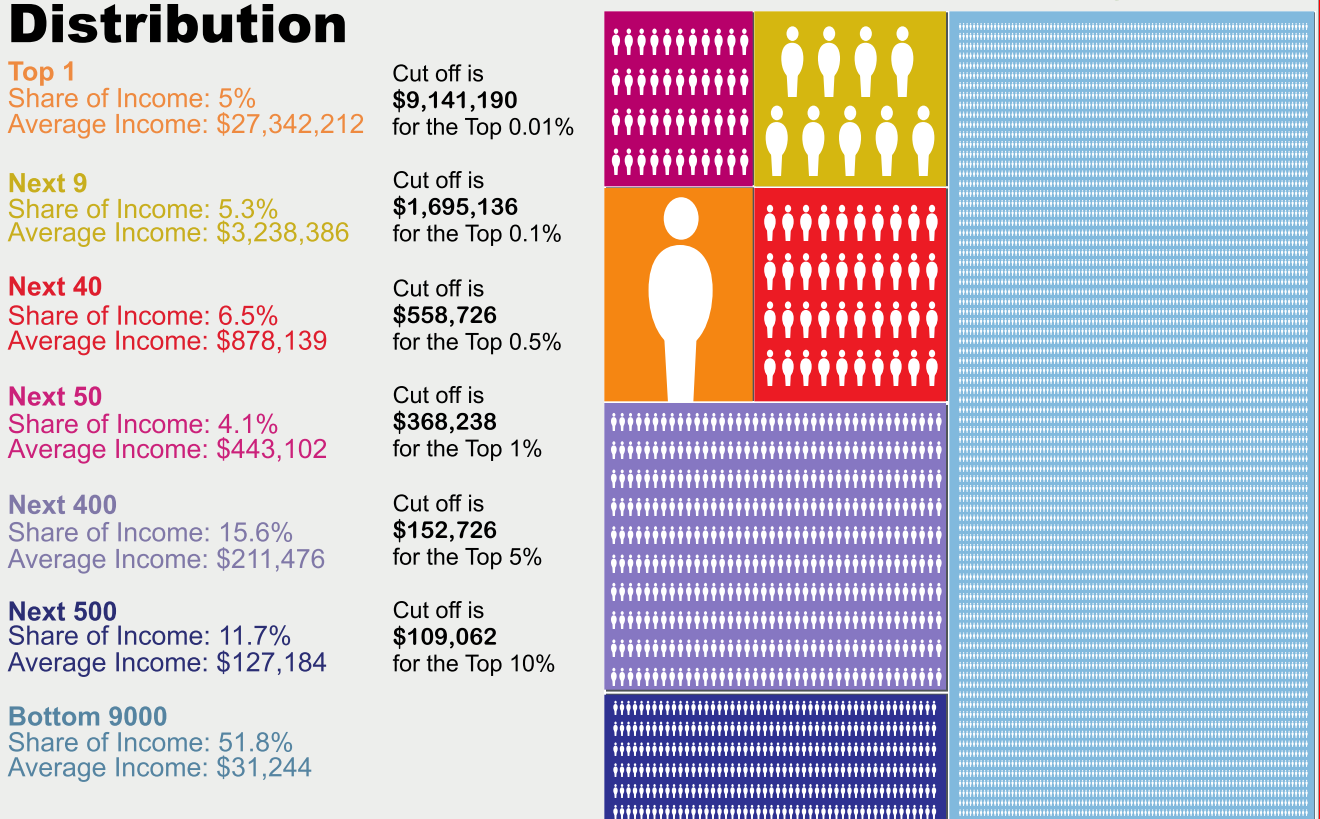
He has, however, missed an important nuance to this widespread discontent. When people are losing their jobs because of "cut-backs" while executives enjoy ever larger compensation packages something is off. When managers are told to pretend inflation doesn't exist and to keep operational budgets "flat" for years on end, almost any organization ends up teetering like an upside-down pyramid. It is a failure to invest in people - and not in terms of salary, but the information, tools and environment in which they work - rather than the product, and profit, they produce. By ignoring the human in their human capital many companies are in fact hollowing out their own employees.

The dissatisfaction cuts across many lines: political, socio-economic, ethnic, employment status as well as nature of employment. It is rooted in the experiences of the suit-wearers and the work-a-day folk alike that tells them logarithmic compensation growth for the mucky mucks in the face of ever constrained budgets seems, well, hypocritical. I am one of the lucky ones: mostly satisfied, enjoying simple pleasures of love, home, friends and family. I give no thought to those who have more - so what? I give thought, action and dollars towards those who have less. I greatly value the goods and services that come with paying my taxes, believe there are ways to do things better with what we have, and have a preference for keeping as much of my own money as possible.

With all this, I just cannot believe anyone is worth tens of millions of dollars a year for what they do, be it in professional sports, acting in a film or running a company. The idea that one person delivers that much "value" is nothing more than a cult. And when you see the disparity in a graphic like the one here: http://www.ritholtz.com/blog/wp-content/uploads/2011/10/Distribution.png, well . . . .


When reading something makes you think, what do you do?

Look out: another outbreak of sticky note syndrome.  

I admit to happily scribbling in books I own (The Information by Gleick is well marked!) but will never do so in a Library book - it just isn't right.

As much as I would love to own most of the books that make me think, I am quite sure that the cost of the books will far out weigh that of the sticky notes (especially since the latter is a frequent give away compared to the former!)

Mind you, I also have assorted notebooks full of titles and authors and page references. And for the past few years I have occasionally transmitted such bookish thoughts into 0s and 1s (such as here).

In the process of cataloguing the books I own via LibraryThing I found myself immersed in memories associated with every item.  While I cannot claim to have read every book in its entirety, I am deeply familiar with the vast majority.  They all proclaim their salience as vessels of learning, and reminders of what is known.

When we find ourselves in a formal learning environment the natural output of the interaction between substance and sponge is in the form of research papers, writing up experimental results and other assignments.   Most people don't live their lives in such environments, but that doesn't mean the learning process stops, right?   The idea of life long learning has a long tradition, whether it is on the basics (think Frontier College) or beyond. 


I've come to think of learning as an expression of what it means to be alive. There are so many things to learn, so many ways to learn them.  And the power of sharing what is learned has never been greater.

September is Life Long Literacy Month, and today is International Literacy Day.  Check out ABC Life Literacy Canada for more information on these initiatives.

Sense-Making and Symbolism

We've all experienced the ease of understanding that comes when we're engaged, as much as the difficulty of learning something we don't find meaningful.    The notion that we are more invested in learning what interests us surely comes as no surprise.

And it just might be built into our DNA.

On one of my recent browsings at S. Walter Stewart I found The First Idea how symbols, language and intelligence evolved from our primate ancestors to modern humans, by Stanley I. Greenspan and Stuart G. Shanker.  It is a powerful read, presenting a new theory of language acquisition and learning that is intertwined with a novel perspective on the evolution of human cognitive capacity. 

The crux of their argument is that language and learning is rooted in our human capacity to be emotionally affected by the world around us. 

The authors reject as unsatisfactory the Big Bang theory of language acquisition  (e.g. Chomsky and Pinker), which implicates sudden genetic mutations during the Pleistocene as primary forces in the development of language.  One such mutation created a change in human anatomy: the descent of the larynx, permitting the kind of vocalizations we now call speech. The Big Bang theory ties this ability to speak to the notion of language skills, reducing the acquisition of language to a set of innate heuristics set free from their physical constraints.


Greenspan and Shanker, on the other hand, present a compelling argument that our linguistic abilities have little to do with the noises we make, both now and in our evolutionary past. The authors draw on research with infants and children across a wide spectrum of developmental ability, as well as work with non-human primates, to show that our ability to employ symbols and provide meaningful signals to others is grounded in an emotive response to our environment which can be expressed in many ways, not just speech.

In other words, we developed language skills so we could communicate about what matters.

Knowing the importance of an emotional investment in learning means that culture and behaviour matter more than ever, especially in the presence of developmental disabilities.   This is perhaps the most significant aspect of the authors' research: positive outcomes for children and families living with Autism and other developmental disorders.

All this certainly seems to reinforce the importance of being passionate in what we do, reflecting the wisdom of the cliche "follow your heart" 

You can read more about Shanker's work at York University's Milton and Ethel Harris Research Initiative. 


Lessons from Literature Part 2

I have always been an avid mystery fan.   Of the few books I actually purchased for myself as a child, Agatha Christie mysteries easily made up half (the other half being works by C.S. Lewis). 

Poirot and Ms Marple fascinated me in their seemingly quirky ability to ferret out the many truths of a situation - the story is never just about "who done it" - though of course they each had a method, coupled with discipline and discernment.

Method, discipline and discernment.
In many ways these words also describe the research process. No surprise, really. The art of detection, be it in a fictional character or the real world, is a process of research, figuring out what is possible within the context of any given problem.   To quote Holmes himself:
How often have I said to you that when you have eliminated the impossible, whatever remains, however improbable, must be the truth?

Just a perusal of the Wikipedia page of Sherlock Holmes quotes demonstrates this recurring theme across many stories. 

I personally find this mystery/puzzle motif a powerful motivation for learning, and I've used it for years when sharing my knowledge of business research tools and techniques (presentation at CLA 2010 here).  By imagining the process through this lens I think it demystifies unfamiliar content by placing it in a familiar framework that combines 1) fun and games on the one hand,  and 2) existing skill sets on the other. 


So much of research and reference is figuring it out as we go - Librarians don't know all the answers, but we have a method, coupled with discipline and discernment, to know how to look for the answers.   It is about the unique relationship between what is known and what is needed, and creating that improbable bridge that links them.

Are you being served?

Recent events in Toronto have significantly raised the profile of Public Libraries in Canada.   Alexandra Yarrow has a great summation of and rebuttal to much of the press over the past few weeks at her blog Only connect.  CBC Radio's interviews with  Moe Hosseini-Ara, with Markham Public Library, and Ken Roberts with Hamilton Public on The Current provide powerful messages about the power of the Library to change lives. And just today Brian Hutchinson  at the National Post weighed in, declaring Public Libraries eclectic and vital.

Indeed, they are, and in ways that can be quantified and enumerated and used to bolster support.

This was Ken Haycock's very essential point in his 2 blog posts on July 25th regarding the brouhaha.  Advocacy that appears self-serving will do more harm than good.  Instead, craft advocacy messages that
  • show an ability to connect with patrons; 
  • are based on data that documents unique value; 
  • result from relationships with decision makers; 
  • reflect an understanding of priorities; 
  • offers solutions, not problems.
Librarianship is about service. The thing about service is that it is never about the one doing the serving.  I would even argue that the best service is the one that is invisible - what you need is there, when you need it, because some one else is anticipating your needs so well.  
It is this kind of service that turns a dining experience - regardless of the food - from merely good to sublime.


Back here in Toronto Councillors themselves have already foregone a salary increase and cut office budgets.   While many will call this purely symbolic, the fact is real dollars are involved, dollars that hopefully will be used in some front line service activity.

I'm not sure any library of any kind can ever achieve that seamless perfect service. Inevitably the choice of one resource denies the possibility of another. I have purchased many books simply because my Library doesn't have them, or has only a single non-lending copy.   I have read yet many more books I did not even know existed because of all the materials my Library did acquire, and it was just there on the shelf waiting for me.
And I think this is where we find the beauty, power and value of Public Libraries - with so much to learn in such a big world, the Public Library brings it down to scale.

Even down to a single shelf:


what do you want to learn? you'll find it @ your library! 
This was taken earlier this summer at S. Walter Stewart. Titles include Project Orion (nuclear explosions 629.4753 DYS), Professional Microsoft Robotics (robotics 629.89 JOH) The Self-Sufficient Life and How to Live it (home economics - rural 630 SEY) and Apples to Oysters (cooking, Canadian (630.971 WEB). 

Books: antique technology for a new age

A blog post on Information Today recently posed the question: is the future of books and libraries intertwined? 
The question frustrates me in the same way that the never ending pursuit of some word other than Librarian frustrates me: it is a false problem, scattering our focus away from what I think are more useful ponderings. Surely the question is rhetorical (“no, they are not!”), and therefore of limited use in discussing what the next incarnation of Libraries might look like. 

If we were to consider the relationship between publishing and Libraries, well, that would be a much more fruitful discussion. 

It provides us a broader, and I believe more appropriate field of inquiry.  As much as the book came before publishing, the advent of publishing (via printing technology) changed the role of the book forever. It was no longer a rare item of great value representing human artistry and skill, but rather the artifact of a mechanical process that enabled the broader transmission of ideas.   Libraries are about what's between the covers; Librarianship is about getting at the knowledge, whether it is found in a printed book or otherwise.  

I took a course on publishing during my MLIS studies at U of A. It simply made sense to me that I should understand an industry and process that is so fundamental to the work of Librarianship. I grew into Librarianship just as Google was getting started. Web search had been around already for a number of years, and of course electronic databases had been a mainstay of Librarianship for decades. We considered the antecedents to the publishing environment in the late 90s, pondered the future.  I doubt anyone in that course could have accurately foretold the extent to which electronic access to content would take hold: Google barely existed; the thought of Google Books within a decade would have seemed audacious.

Despite the News Corp and McGraw-Hills of the world, publishing generally is not a high margin industry. Navigating the fickle and changeable marketplace of ideas has always been difficult. It has its quirks, as do most industries. For instance, the handling of remainders: unsold titles sent back to publishers from retailers, ensuring the publisher faces the responsibility for a misjudging demand.

And As Andrew Pettegree notes a number of times in his fabulous tome The Book in the Renaissance, it has always been this way. The publishing industry, not just of books but of pamphlets, legal notices, and newspaper broadsheets, all of it emerged very directly from Gutenberg's revolutionary invention in the mid 15th century.  Publishing, after all is the process of deciding what to print, and how many; and then investing considerable cash outlay against unpredictable future earnings.  Presses were expensive to set up; recouping this investment by printing saleable materials was essential.  Gutenberg was the first of many printers to learn the hard way, facing financial ruin because of publishing decisions gone awry.
Pettegree's Book is a delight to read. I am life long bibliophile, and still prefer paper to a screen.  To the extent that I discovered this book while snaking through the stacks at my local TPL branch in search of serendipity, it is entirely possible I would not have read it otherwise.  
what to do when a book gets stickynoteitis? or is it sticky note plague?

Having said that, The Book in the Renaissance sheds light on the publishing environment today.  The early printing industry faced many hurdles, not least of which was availability of paper. The absence of linen or other appropriate rags for paper production in Northern Europe slowed the spread of printing establishments, as importing it was prohibitively expensive. 

It equally gave me tremendous appreciation for the realities of publishing today. As publishing and the trade in ideas developed, it did so based on which ideas sold the best. Despite the humanism of the day, the spread of the printed word was driven purely by economics. The best selling titles, then as now, were not of an intellectual bent. Printing succeeded at centers of trade, not university towns. 
And with good reason, as there was certainly money to be made. As early as 1466 the value of stock of a Paris book merchant was equivalent to the annual income of a leading nobleman of France. Keep in mind, however, these books were unsold.
Many more printers and publishers failed than succeeded in the first 400 years of our relationship with the book; there was similarly halting success in the emergence of formal or institutional Libraries.
Ultimately the humanist ideals were achieved via the market place anyway. If looking for causality in history, here's one that seems quite clear to me:
Following the development of the movable type printing press, printing indulgences became a significant source of steady income for printers; indulgences were easier to print therefore it was easier for the Church to use them to raise funds; it was abused enough to provoke the ire of one Martin Luther who in turn used the same technology, but in the vernacular, driving a wave of literacy and increased demand for reading materials in addition to tremendous religious upheaval and a wave of exploration and discovery. 

Hmmm  . . . accessible materials and a captivating idea drove the early spread of literacy. Interesting. 

Every industry has it's cost drivers, some primary element without which the industry does not function. Beyond basic start up costs, for printing and publishing the main driver was  the cost for the paper itself; experienced workers would also factor in, with compensation for content developers being a mere blip in the overall scheme. 

Only very recently have content developers become a more significant cost driver, resulting from a combination of international copyright, and growing demand for materials of all kinds,  educational or otherwise. Now, of course, content is king. Creators of content command significant sums of money to share their thoughts with the rest of the world, be it via a best selling novel, investigative journalism, research and advice from consultancies, or a blog.  Just as the cost drivers have shifted, so have the conditions around codifying and sharing knowledge: 
the physical barriers to production represented by an older information technology ie a book are replaced by technological barriers to access in the newer information technology.
Clearly the printed word is still with us, still instrumental in facilitating the sharing of human knowledge and experience. The legacy of the book, of print and publishing will live on: not every idea survives.  Just as always, content has to be findable, has to be accessible, has to captivate and drive us forward. Just as always we will need some kind of technology to enable access.  For millions of people around the world, including me, this will happen at and through our Libraries. 


Oh no, another L word

Attending TEDxLibrariansTO last Saturday was an inspiring experience on a topic near and dear to my heart: Librarians as Thought Leaders. While I'd never really put it that way, I figured I knew what was meant.  I  eagerly anticipated the day, having only dim notions of what to expect.

I loved the format: brief, fascinating talks touching topics that leave you wanting more from each one, rather than feeling overwhelmed by it all.

Shelley Archibald and Fiacre O'Duinn were consummate hosts, ensuring good food, good conversation and a wonderful opportunity to meet interesting people.  All told, a great day.

It brought to mind another inspiring experience regarding leadership and Librarianship: The Northern Exposure to Leadership Institute. I was successfully nominated by CASLIS for the 2007 Institute. After I came home I took some time to reflect on and write about this great opportunity:
I really didn’t expect attending the Northern Exposure to Leadership Institute to be a humbling experience. Invigorating, yes. Inspiring even. Maybe just a little bit cheesy. Yet as I sat on the floor on our last day at Emerald Lodge and looked around the room I found myself feeling rather, well, small. For those who know me personally, that is a truly unusual feeling for me.

So there we sat in a circle on the floor. Every other time we had been in this room it was full of chairs and tables and food and flipcharts and bags and books and oh so much more. Now it was just us: participants, facilitators, mentors, organizers. I realized as I sat on the floor that I was looking at leaders, everywhere I turned! I had not learned how to be a leader at NEL; no, I had learned to recognize leadership in all its diversity. Wow.
NEL is a focus on the essence of librarianship. It is about what we do and how we do it. It is about recognizing our ability to facilitate change through facilitating access to the right information at the right time.

This was my daily bread when working as a Librarian in the corporate sector, where every day in some way large or small, the work I did had an positive impact on the work of others.  In serving the information needs of my colleagues I helped make change happen.  

In fact, one of the books that came my way during my NEL experience explicitly addressed the idea of servant leadership.  Facilitating the work of others in a way that they don't have to think about how or where, and just do their own "what", that is a form of leadership.  But please do not confuse servant leadership with notions of servility: leaders are sure of their presence, they know how to claim, own and share their contributions. 
Librarians struggle with notions of leadership and leader. This was expressed at NEL as well as at TEDxLibrarians, where talk turned at times to who are leaders in Librarianship (or Libraryland, a la Amy Buckland).  Along with it came that same expression of discomfort with the idea that a Librarian would aspire to be a LEADER, and that many of our current leaders work outside of Libraries (consultants, vendors etc).

Which brings to mind another similarity.
Librarians tend to conflate our whatness with our whereness. Talk about Librarianship easily, but erroneously, slips into talk about Libraries and hierarchies and infrastructure . . . and no one really notices. This was the case at TEDxLibrariansTO as much as it was at NEL.

What I wrote back in  2007 was 
It is almost as though the institution in which many librarians work becomes the entirety of the profession. Thinking about librarianship becomes a reflection on the boxes in which we work, rather than on the work we do.
Special librarians do not have the luxury, or is it the burden? of an institutional filter when thinking about librarianship. No, we in fact must reference and consider factors outside our workplaces and so are forced into bigger picture thinking.
I do think that special Librarians have an inherently different view on Librarianship. The focus has always been on what, how and who, rather than where; but ultimately, a focus on service.
Considering that the Special Libraries Association is now over 100 years old, there is evidence not just for the long term proliferation of Librarians throughout the non-Traditional realm, but of also of a long term overt recognition that to practice Librarianship in these environments requires a strong network and a keen interest in engaging with and learning from a highly diverse range of professional colleagues.  Associations are always the result of the collective work of the members, giving of money, time and expertise in service to their colleagues, in order that their colleagues can serve in their respective workplaces. Such voluntary associations don't survive without satisfying some essential need, one people are willing to pay to have filled.


I made a low tech story board video for the TEDxLibrariansTO video challenge which was a lot of fun, (not sure if it is on the youtube channel? forgot to mention my own name in the video, see, so . . . anyway it is here, and sorry in advance for any nausea you may feel!)

In it, near the very end, I state that Librarians have the power and wisdom to lead from the unknown to the known. I think that is true in any area of human enquiry.  It is with human insight and intervention that our collective knowledge is made accessible for human use.  And this is as true today as it has been for over 4 thousand years.

Librarians are Leaders. It rolls off the tongue so easily, alliteration and all, and we can get familiar with 2 great L words at once.  Let's say it together now.  . .